

4 politico News
Public support for capital punishment continued a decadeslong decline in 2025, dropping to the lowest level recorded in 50 years.
And yet executions carried out by governmental authorities are expected to reach their highest level in 15 years — nearly doubling over last year’s numbers.
Forty-six people were executed in 2025, according to an annual report released on Monday by the Death Penalty Information Center, which provides comprehensive data on each year’s execution trends. Two more executions — one in Florida and one in Georgia — are scheduled for later this week.
The nearly 50 people who will be executed this year is a steep increase from the 25 people killed by capital punishment in 2024.
“There is a huge disconnect between what the public wants and what elected officials are doing.”
“There is a huge disconnect between what the public wants and what elected officials are doing,” Robin Maher, the executive director of the Death Penalty Information Center, told The Intercept, noting that public polling has found just 52 percent of the public supports executions and opposition to the practice is at the highest level since 1966.
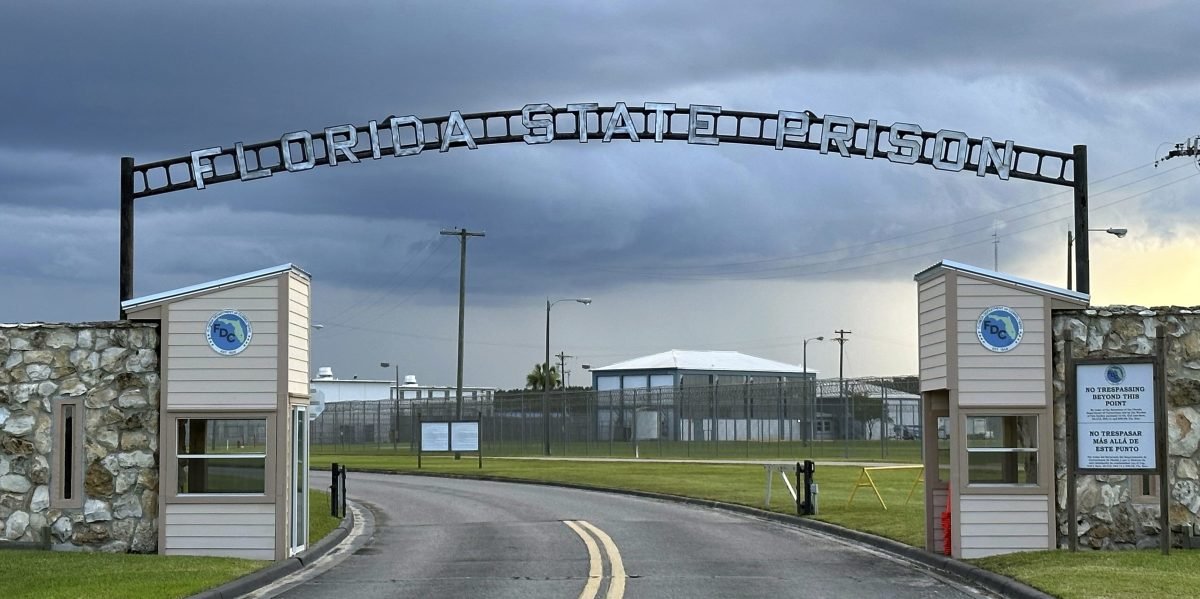
The surge was driven by Florida, which is poised to conduct 19 executions, accounting for 40 percent of the nation’s death sentences in 2025. Only Texas has ever killed as many people on death row in a single year.
“It very much feels political,” said Maria DeLiberato, legal and policy director at the Floridians for Alternatives to the Death Penalty. “It seems the current Florida administration has really been in lockstep with the Trump administration, and this idea of appearing to be tough on crime.”
In response to an inquiry, Alex Lanfranconi, a spokesperson for far-right Florida Gov. Ron DeSantis, said, “My advice to those who are seeking to avoid the death penalty in Florida would be to not murder people.”
Alabama, South Carolina, and Texas each had five executions, meaning just four states accounted for nearly three-quarters of the executions carried out over the past calendar year.
Even as the number of executions surged, the number of new death sentences handed out at trial declined.
Of the more than 50 capital trials that reached the sentencing phase in 2025, just 22 resulted in a death sentence. Many of the new death sentences came from cases in Florida and Alabama, where a non-unanimous jury can impose capital punishment.
New Pro-Death Penalty Laws
The death penalty is legalized in 27 states, though governors in four of them have paused capital punishment.
Despite steadily growing public disapproval of the practice, elected officials in states that conduct executions have aggressively introduced legislation that would enable them to more easily carry out death sentences. In recent years, states carrying out capital punishment have passed bills to create strict secrecy around executions, expand crimes eligible for the death penalty crimes, and add new methods of killing prisoners.
In 2025, the trend continued. Legislators in 11 states and the U.S. Congress introduced bills to expand the use of capital punishment, according to the Death Penalty Information Center’s tally.
Arkansas, Idaho, and Oklahoma enacted legislation to allow the death penalty for people convicted of non-lethal sex crimes, even though the Supreme Court has banned this punishment in such cases.
Multiple state governments added new execution protocols, while legislators in other states introduced bills to expand the death penalty in various ways. Florida passed a vague bill authorizing “a method not deemed unconstitutional,” and an Idaho bill made death by firing squad the state’s primary death sentence method. Arkansas approved legislation to use nitrogen in executions, joining Alabama, Mississippi, and Louisiana, which conducted its first gas execution this year.
While these states sought to expand their approved uses and methods of capital punishment, other jurisdictions generated a slew of constitutional concerns as executions appeared to result in prolonged suffering or deviated from outlined protocols.
In Tennessee, executions resumed after a five-year hiatus and a review that found the state had improperly tested execution drugs and failed to follow its own procedures. Byron Black, the second man killed under a subsequently enacted protocol, reportedly groaned and cried out during his execution; an autopsy found he had developed pulmonary edema, a form of lung damage commonly found in people who are executed by lethal injection.
South Carolina became the first state in 15 years to carry out a death sentence using a firing squad.
After winning a yearslong court battle over the constitutionality of firing squad executions, South Carolina became the first state in 15 years to carry out a death sentence using the method. Attempts to kill prisoners with this protocol ushered in fresh concerns over whether the executions violate the constitutional ban on cruel and unusual punishment.
In May, lawyers for Mikal Mahdi, the second man killed by firing squad in the state, filed a lawsuit saying that, though South Carolina’s execution protocol requires executioners to shoot three bullets into the condemned prisoner’s heart, the state’s autopsy found only two bullet wounds in Mahdi’s chest and that both largely missed his heart.
“These facts, drawn from the autopsy commissioned by the South Carolina Department of Corrections (SCDC), explain why witnesses to Mr. Mahdi’s execution heard him scream and groan both when he was shot and nearly a minute afterward,” lawyers wrote in a court filing.
The state said two of the bullets entered Mahdi’s body at the same location — a claim that the forensic pathologist hired by Mahdi’s legal team called “extraordinarily uncommon.” A Department of Corrections spokesperson told The Intercept that the autopsy showed all three bullets hit Mahdi’s heart.
And in Alabama, nitrogen executions continued to take far longer than the state had said they would. Though state officials had pledged in court that prisoners would lose consciousness within “seconds” of the gas flowing and die in about five minutes, that has not happened.
Anthony Boyd’s October execution took nearly 40 minutes, according to a journalist who witnessed it. Media reports said that the 54-year-old rose off the gurney, shook and gasped for breath more than 225 times.
As he had in other nitrogen executions, Alabama prison commissioner John Hamm maintained that the execution had proceeded according to plan.
“It was within the protocol, but it has been the longest,” Hamm said.
Like many other states, Alabama has never released an unredacted protocol or transparently answered questions about its source of execution materials.
“Experimental, Untested Methods”
Maher, the head of the Death Penalty Information Center, said that this kind of conduct, particularly when problems arise during executions, undermines democratic principles.
“We are seeing that many elected officials are just shamelessly putting out narratives that defy the witness observations of executions that have gone terribly wrong,” she said. “We need to have officials who are willing to tell the truth about the death penalty.”
While the Supreme Court can halt executions over constitutional concerns, it did not grant a single stay in 2025.
“I don’t think we would have seen these experimental, untested methods used 20 years ago,” Maher said. “Part of the explanation is because the United States Supreme Court has signaled very clearly that it does not intend to step in and halt use of these methods.”