
The Guardline
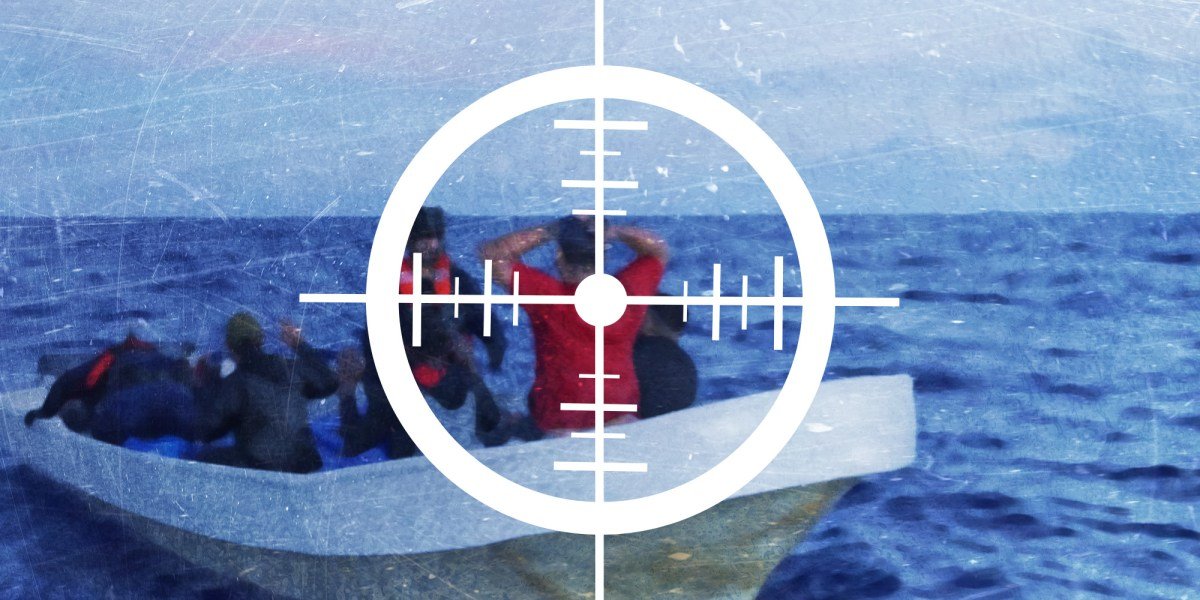
President Donald Trump has hailed the U.S. military’s missile strikes on suspected drug smuggling boats from Venezuela as a blow against “narcoterrorists” trafficking cocaine and fentanyl. For this, they deserve death.
The sinister imagery conjured by the language, however, is starkly out of step with the picture of typical smuggling crews in the Caribbean painted by accounts from court records, a study of hundreds of federal defendants, and a former prosecutor.
Many drug smugglers in the Caribbean Sea are impoverished fishermen hailing from small villages, a profile that lines up with local reports about the crew of the first boat targeted by Trump.
Then there are Trump’s claims about the drugs themselves. If the U.S. strikes are aimed at stopping the flow of fentanyl into the U.S., he targeted the wrong country; Venezuela is neither a major source nor distributor of fentanyl, and its citizens are typically caught with cocaine.
Trump’s boasts about the strikes outraged Sean Murphy, a former federal prosecutor in Puerto Rico who handled dozens of smuggling cases. Traffickers view the crews of smuggling boats as expendable and will quickly find another way to send drugs to the U.S., he said.
“They are going to be sitting around their gold-plated table, in a mansion with a bunch of hippos and tigers and whatever, and say, ‘What now? Trump is blowing up boats in the south Caribbean. What now?’ And they will figure out something else,” he said.
So far, the Trump administration has offered no evidence that the speedboat attacks killed high-level traffickers. One Pentagon official, speaking on condition of anonymity to The Intercept, previously described the first strike as a criminal act.
The White House defended the strikes in a statement to The Intercept.
“It’s shameful that The Intercept is running cover for evil narcoterrorists trying to poison our homeland as over 100,000 Americans die from overdoses every year,” said Anna Kelly, a White House spokesperson. “The President acted in line with the laws of armed conflict to protect our country from those trying to bring poison to our shores,” said Anna Kelly, a White House spokesperson, “and he is delivering on his promise to take on the cartels and eliminate these national security threats from murdering more Americans.”
“Poorest and Weakest Link”
Murphy, who also handled January 6 insurrection cases and resigned earlier this year while criticizing the direction of the Justice Department under Trump, said most of the defendants he prosecuted were poor, uneducated fisherman. His firsthand experience is backed up by a large-scale academic study of hundreds of “boat defendants.”
An average of 455 suspected traffickers are detained by the U.S. at sea each year, three-quarters of them in the Pacific, according to the May article in the Federal Sentencing Reporter. Most were caught on 10 to 20-foot open boats with three or four occupants. They were on average 42 years old. They were almost always unarmed.
While the boats are often caught with large amounts of drugs — 854 kilograms during an average cocaine bust — the men on board usually are not the owners. They may have been hired by agents for expected payouts of as little as $5,000.
Phil Gunson, an expert on the Andes region for the International Crisis Group, put it even more bluntly.
“They are the poorest and weakest link,” he said. “They are simply pawns in the operation.”
Federal judges frequently acknowledged the bit part that boat crews play in the drug trade by dipping below sentencing guidelines, according to the academic study of such cases. On average since a 2018 change to sentencing laws, they gave smugglers an eight-year prison sentence.
Now the sentence is death — even though the profiles of smugglers on the boats struck by the U.S. military seems to closely match the defendants previously hauled into court.
Although the Venezuelan government quickly moved in to seal off the coastal village where many of the alleged traffickers hailed from after the first strike on September 2, local outlets reported on social media posts that at least some were ordinary fishermen.
Since then, Trump has directed two more strikes on speedboats in the Caribbean. Few details about the crew of either boat have emerged.
Officials from the Dominican Republic said over the weekend that they had recovered roughly 2,200 pounds of cocaine from one of the boats hit by a U.S. airstrike.
Wrong Country, Wrong Drug
Trump and other officials have made much of Venezuelan President Nicolás Maduro’s alleged complicity in the drug trade, but experts say the country plays at most a small role in trafficking, and almost none in the distribution of fentanyl.
A recent State Department report found that Mexico is “the only significant source of illicit fentanyl and fentanyl analogues significantly affecting the United States.”
Cocaine is by far the most typical drug trafficked across in the eastern Caribbean, according to experts. Fentanyl is sometimes cut into the cocaine after it reaches the U.S., but Venezuelan crew members would have no firsthand role in that process.
“In the south Caribbean, cocaine is king,” Murphy, the former federal prosecutor, said.
Trump may have other goals in focusing on a country that neither produces nor transports large amounts of fentanyl, according to experts on the region.
John Walsh, the director of drug policies at the nonprofit Washington Office on Latin America, said he saw two factors at play. One is to put pressure on the government of Maduro, an American adversary, in the hope that internal support crumbles. The other is to buttress Trump’s claim that Maduro has directed an “invasion” of drugs and people at the U.S. border.
“Big domestic priorities — mass deportation, and emergencies that justify tariffs — somehow link to this narrative of an invasion,” Walsh said. “Venezuela comes in handy in that case, if the case can be made that these drugs are flooding in, they’re coming from Venezuela, and the Venezuelan government at the behest of President Maduro is orchestrating it. I don’t think any of that adds up, but I think that is why Venezuela.”
Fleeting Changes, Lasting Damage
The Trump administration’s legal justification for the strikes on suspected smuggling boats has been panned by scholars of international and maritime law. Murphy called it “murder.” Colombian President Gustavo Petro has used the same word.
The administration says the old model of law enforcement interdiction was not working.
Experts on narcotrafficking, however, said the strikes are not likely to have much practical effect on the drug trade either.
“Traffickers are extremely adaptable, and they are very resourceful, and they have various options. They can change the route,” said Gunson, of the International Crisis Group.
In an interview with CBS on Tuesday, Secretary of State Marco Rubio claimed that the strikes were having the intended deterrent effect on trafficking shipments.
“The way it’s been handled in the past hasn’t worked. And boy, let me tell you something — you’re not seeing nearly as many boats right now as you were a couple weeks ago. So it has worked and will continue to work,” Rubio said. “He’s not going to continue to allow these drug cartels to flood America with poisonous drugs that are killing our people indefinitely.”
There are already reports, however, that trafficking organizations are routing more drugs through the Pacific to avoid the U.S. military, Gunson said.
For Walsh, the strikes underscored once again the futility of drug prohibition. As long as demand for drugs exists in the U.S., drug traffickers will have the incentive to provide supply.
“What about this new U.S. strategy of ‘kill-first, ask-questions-never’ is going to change that to fundamentally deter and transform the underlying structure and dynamics?” Walsh said. “I don’t think anything. It’s going to kill more people — as far as the big fish and kingpins of the drug trade are concerned — they couldn’t give a damn about.”