

4 politico News
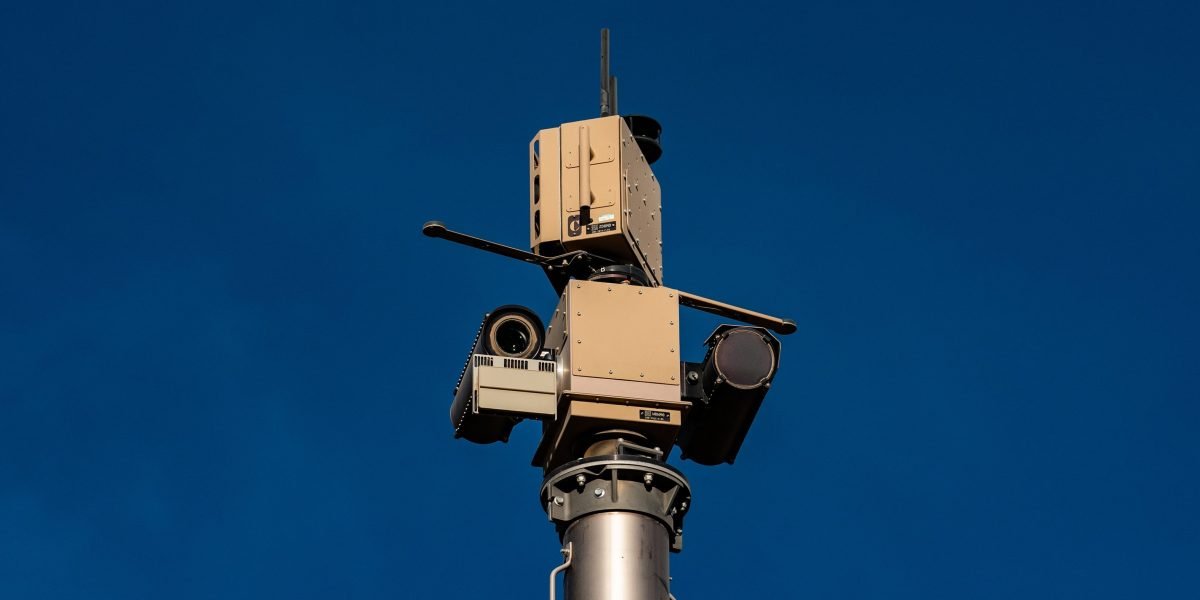
Anduril Industries is a major beneficiary of the One Big Beautiful Bill Act, which includes a section that essentially grants the weapons firm a monopoly on new surveillance towers for U.S. Customs and Border Protection across the southern and northern borders.
The legislation, signed into law by President Donald Trump on July 4, provides significant spending increases to military and law enforcement projects, including over $6 billion for various border security technologies. Among these initiatives is expanding the ever-widening “virtual wall” of sensor-laden surveillance towers along the U.S.-Mexico border, where computers increasingly carry out the work of detecting and apprehending migrants.
Anduril, today a full-fledged military contractor, got its start selling software-augmented surveillance towers to CBP. Anduril has pitched its Sentry Tower line on the strength of its “autonomous” capabilities, which use machine learning software to perpetually scan the horizon for possible objects of interest — i.e. people attempting to cross the border — rather than requiring a human to monitor sensor feeds. Thanks to bipartisan support for the vision of a border locked down by computerized eyes, Anduril has become a dominant player in border surveillance, edging out incumbents like Elbit and General Dynamics.
Now, that position looks to be enshrined in law: A provision buried in the new mega-legislation stipulates that none of the $6 billion border tech payday can be spent on border towers unless they’ve been “tested and accepted by U.S. Customs and Border Protection to deliver autonomous capabilities.”
The bill defines “autonomous” as “a system designed to apply artificial intelligence, machine learning, computer vision, or other algorithms to accurately detect, identify, classify, and track items of interest in real time such that the system can make operational adjustments without the active engagement of personnel or continuous human command or control.”
Anduril is now the country’s only approved border tower vendor.
That reads like a description of Anduril’s product — because it might as well be. A CBP spokesperson confirmed to The Intercept that under the new law, Anduril is now the country’s only approved border tower vendor. Although CBP’s plans for border surveillance tend to be in flux, Homeland Security presentation documents have cited the need for hundreds of new towers in the near future, money that for the time being will only be available to Anduril.
Anduril did not respond to a request for comment.
In a statement to The Intercept, Dave Maass, investigations director at the Electronic Frontier Foundation and a longtime observer of border surveillance technologies, raised concerns about the apparent codification of militarized AI at the border. “I was cynically expecting Trump’s bill to quadruple-down on wasteful surveillance technology at the border, but I was not expecting language that appears to grant an exclusive license to Anduril to install AI-powered towers,” he said. “For 25 years, surveillance towers have enriched influential contractors while delivering little security, and it appears this pattern isn’t going to change anytime soon. Will this mean more towers in public parks and AI monitoring the everyday affairs of border neighborhoods? Most likely. Taxpayers will continue footing the bill while border communities will pay an additional price with their privacy and human rights.”
“Taxpayers will continue footing the bill while border communities will pay an additional price with their privacy and human rights.”
The law’s stipulation is not only a major boon to Anduril, but a blow to its competitors, now essentially locked out of a lucrative and burgeoning market until they can gain the same certification from CBP. In April, The Intercept reported on a project to add machine learning surveillance capabilities to older towers manufactured by the Israeli military contractor Elbit, and General Dynamics’ Information Technology division has spent years implementing an upgraded version of its Remote Video Surveillance System towers. The fate of these companies’ border business is now unclear.
Elbit did not respond to a request for comment. General Dynamics Information Technology spokesperson Jay Srinivasan did not respond directly when asked about Anduril’s border exclusivity deal, stating, “We can’t speculate on the government’s acquisition strategy and the different contracts it intends to use to exercise the funding,” and pointed to the company’s existing surveillance tower contracts.
Towers like Anduril’s Sentry have proven controversial, hailed by advocates in Silicon Valley and Capitol Hill as a cheaper and more humane way of stopping illegal immigration than building a physical wall, but derided by critics as both ineffective and invasive. Although border towers are frequently marketed with imagery of a lone edifice in a barren desert, CBP has erected surveillance towers, which claim to offer detailed, 24/7 visibility for miles, in populated residential areas. In 2024, the Government Accountability Office reported CBP’s surveillance tower program failed to address all six of the main privacy protections that were supposed to be in place, including a rule that “DHS should collect only PII [Personally Identifiable Information] that is directly relevant and necessary to accomplish the specified purpose(s).”
The new Trump spending package emphasizes the development and purchase of additional autonomous and unmanned military hardware that could prove favorable for Anduril, which has developed a suite of military products that run on machine learning-centric software. One section, for instance, sets aside $1.3 billion for “for expansion of unmanned underwater vehicle production,” an initiative that could dovetail with Anduril’s announcement last year that it would open a 100,000–150,000 square foot facility in Rhode Island dedicated to building autonomous underwater vehicles. Another sets aside $200 million for “the development, procurement, and integration of mass-producible autonomous underwater munitions,” which could describe Anduril’s Copperhead line of self-driving torpedoes, announced in April.
The bill also earmarks billions for suicide attack drones and counter-drone weaponry, technologies also sold by Anduril. Anduril is by no means the only contractor who can provide this weaponry, but it already has billions of dollars worth of contracts with the Pentagon for similar products, and enjoys a particularly friendly relationship with the Trump administration.
Trae Stephens, Anduril’s co-founder and executive chairman, served on Trump’s transition team in 2016 and was reportedly floated for a senior Pentagon position late last year. Michael Obadal, Trump’s nominee for Under Secretary of the Army, worked at Anduril until June, according to his Linkedin, and has come under fire for his refusal to divest his Anduril stock.
Anduril founder Palmer Luckey is also longtime Trump supporter, and has hosted multiple fundraisers for his presidential campaigns.
Following Trump’s reelection last fall, Luckey told CNBC he was sanguine about his company’s fortunes in the new administration. “We did well under Trump, and we did better under Biden,” he said of Anduril. “I think we will do even better now.”
Update: July 9, 2025, 4:45 p.m. ET
This story has been updated to specify that CBP is contracting with General Dynamics’ Information Technology business unit for its border tower program.